
From Shanty Screenings to Global Streams: Rewriting the Script for Uganda’s Film Industry
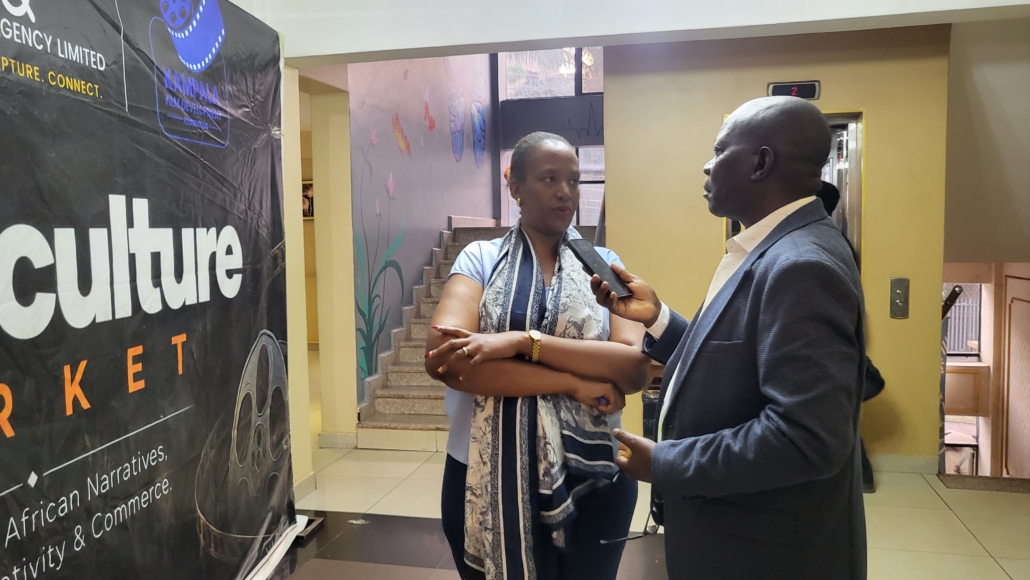
Daphne Ampiire talks to Daniel Meboya at the Film culture Market media activation, Meilin International Hotel
Attending the Media Activation for Film and Culture Market on July 8, 2026, Daphne Ampiire, President of the Screenwriters Guild of Uganda, laid bare the stark paradox of local cinema: a nation hungry for its own stories, but trapped in an exclusionary distribution system. For Uganda’s creative economy to truly thrive, the industry must pivot from passion-driven survival to structured, tech-forward, and legally protected commercialization.
Breaking the Uptown Bottleneck
For years, Ugandan filmmakers have faced a frustrating reality: producing compelling stories with nowhere accessible to exhibit them. “DSTV right now is not accessible to the entire country,” notes Daphne Ampiire, award-winning screenwriter and Managing Director of Floating Duck Productions. While premium pay-TV platforms remain out of reach for ordinary citizens, the demand for homegrown narratives is undeniable.
The proof of concept lies in the vibrant, informal “downtown” film hubs, where low-budget films find immediate, passionate audiences. However, this informal ecosystem comes with a heavy price. “Downtown is proof of concept for us that Ugandans love watching Ugandan content,” Ampiire shares. “But they are stealing their IP. They are not being protected.”
Independent creators frequently sell their life’s work through exploitative, flat-rate buyouts, completely missing out on long-term residuals. To fix this, Ampiire advocates for a democratization of physical cinema infrastructure—lowering ticket prices to 5,000 shillings and taking theaters out of elite uptown malls into everyday neighborhoods where citizens traditionally gather to watch football.
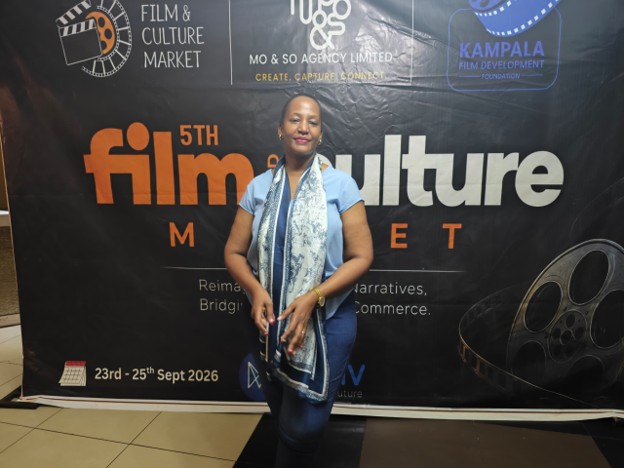
Daphne Ampiire takes a photo at the film culture Market media activation
The One-Trillion-Shilling Turning Point
Historically, the creative sector was plagued by structural fragmentation. Creatives approached government bodies with emotional laments rather than formal policy frameworks. Today, organized guilds are fundamentally changing how the industry bargains. Through the Screenwriters Guild of Uganda (SGU), filmmakers are engaging formally with the Ministry of ICT, Ministry of Gender, and the Ministry of Tourism.
The financial tides are also turning. The Ugandan government’s latest budget features a historic milestone: over one trillion shillings designated for the creative sector across various ministries. While the Uganda Communications Commission (UCC) continues to offer vital seed funding, Ampiire emphasizes that money alone cannot cure systemic legal vulnerabilities.
SGU’s strategic partnership with the Uganda Registration Services Bureau (URSB) is shifting the focus toward intellectual property protection. “When you are a writer, we teach you and educate you about copyright and IP,” Ampiire explains. URSB is now providing access to legal experts to help draft standardized contracts for writers, actors, and producers to ensure they are properly credited and compensated.
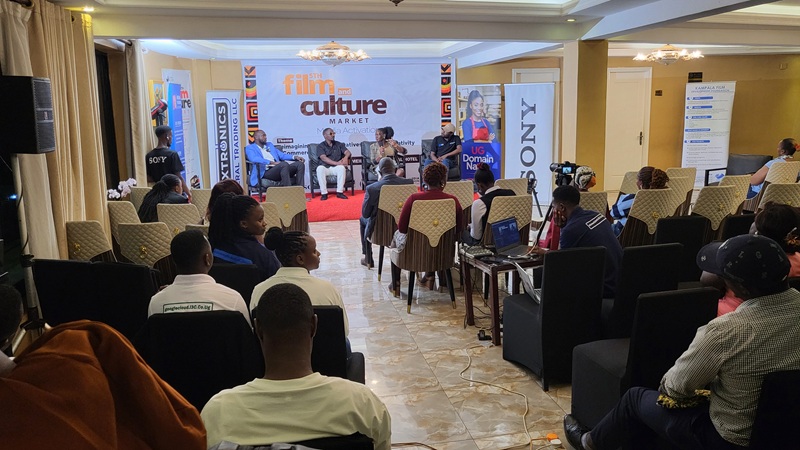
Guests and attendees listen to a panel discussion during the media activation
The Digital Shift: Mobile Screens as the New Cinema
The global media landscape has migrated directly to mobile devices, and Ugandan cinema cannot afford to lag behind. Rather than waiting for expensive, traditional theatrical windows, local filmmakers must optimize for digital agility.
“If you have been a filmmaker who is stuck in film… instead of making a twenty-minute film, make one minute each. Throw it on online platforms,” Ampiire advises, noting that creators producing short-form, two-minute episodic content are currently generating substantial views and revenue online. Furthermore, local television stations must be held accountable to national content quotas. Currently, many broadcasters bypass the 65% local content rule by purchasing cheap, multi-season foreign content for nominal fees rather than paying fair market rates for Ugandan productions.
The Way Forward: A United, Strategic Frontier
Transforming Uganda into an international cinematic powerhouse requires structural patience, market research, and institutional discipline. Moving forward, the industry must prioritize three critical areas of intervention.
First, regulatory bodies must strictly enforce content quotas, penalizing broadcasters flouting the local content threshold and forcing TV stations to buy local. Second, stakeholders need to introduce mobile micro-payment models by leveraging telecom partnerships to create budget-friendly digital distribution packages—such as 10,000 shillings weekly—to monetize content directly via mobile money. Finally, the industry must expand legal literacy by scaling up the nationwide guild and URSB legal training tours to protect grassroots creators from predatory IP buyouts.
“It’s a long journey… It might even take twenty years,” Ampiire reflects. “But we might as well do the work because it’s for us.” By marrying government funding with airtight copyright enforcement and digital innovation, Uganda is finally ready to turn its creative passion into a profitable, self-sustaining global empire.
————–
Authored by: Daniel Massamba Meboya, Strategic Communication Expert